The Flashback of the 60s, 70s, 80s Greatest Music Hits

Oct 4, 2015

King Harvest - Dancing In The Moonlight (1973)

King Harvest - Dancing In The Moonlight (1973) WLCY Radio
"Dancing in the Moonlight" is a song by the rock group King Harvest that was released as a single in 1972 and reached #13 on the Billboard Hot 100. The band released other singles, but they were never able to match the success of "Dancing in the Moonlight". The track used a Wurlitzer electric piano throughout.


repeat
repeat_one
shuffle
skip_previous
play_circle_filled
pause_circle_filled
skip_next
volume_up


The song was written in 1968 by Sherman Kelly, whose brother, Wells Kelly – King Harvest's drummer in the early 1970s – introduced the song to the band. It was originally recorded in 1969 by the American band, Boffalongo, which included Sherman Kelly (who sang lead on this original recording of his own composition) and future King Harvest frontman, Doc Robinson. Wells Kelly later became the original drummer for Orleans. Meanwhile, King Harvest recorded and released "Dancing in the Moonlight" as a single, with "Lady, Come On Home" on the B-side, while the band was based in Paris. Steve Cutler, a jazz drummer from New York City (standing on the pole in the cover picture), played drums on the tracks and toured with the band in France and the UK. The group disbanded after six months, and the single languished for a year, until it was bought and released worldwide by Perception Records.
The song is often wrongly primarily attributed to Van Morrison, Elvis Costello, or "Kink Harris", due to incorrect labeling on various digital download services. Neither Morrison nor Costello has recorded a version of "Dancing in the Moonlight", and "Kink Harris" does not exist. A musical number of the song is featured in Richard Wenk's comedic short, Dracula Bites the Big Apple.

Albert Hammond - It Never Rains In Southern California (1973)

Albert Hammond - It Never Rains In Southern California (1973) - WLCY Radio
"It Never Rains in Southern California", written by Albert Hammond and Mike Hazlewood, is a song first released by Hammond, a British born singer-songwriter, in 1972. Instrumental backing was provided by L.A. session musicians from the Wrecking Crew. The song is from his album, It Never Rains in Southern California. Hammond's version peaked at number five on the U.S. Billboard Hot 100 that year.


In the UK the song is perhaps the quintessential example (alongside The Doobie Brothers "Listen to the Music") of a turntable hit: A song which, although very frequently played and requested on radio, never makes it into the charts. Through the 1970s, the record was re-issued at least five times by various labels—but remained outside the UK top 40, despite yet more airplay—and is still frequently to be heard on UK radio.

The song concerns the struggles of an actor who moves out to California to pursue a career in Hollywood but does not have any success and deteriorates in the process. In the chorus, Hammond sings, "It never rains in California, but girl don't they warn ya. It pours, man it pours."

In 1989, Hammond re-recorded the song for his "Best of Me" greatest hits compilation.

Hall & Oates - Sara Smile (1976)

Hall & Oates - Sara Smile (1976) On WLCY Radio
'70s #1 Hits on WLCY Radio


"Sara Smile" is a song written and recorded by the American musical duo Hall & Oates. It was released in January 1976 as the second single from their album Daryl Hall & John Oates. The song was the group's first Top 10 hit in the US, reaching number four on the Billboard Hot 100.

"Sara Smile" was the second single released from Hall & Oates' 1975 self-titled album for RCA Records. Co-written by both halves of the duo, it was Hall & Oates's breakthrough single, with a #4 peak on the Billboard Hot 100 charts in 1976. It was written about Hall's then-girlfriend, Sara Allen. The couple was together for almost 30 years before breaking up in 2001.

Oct 3, 2015

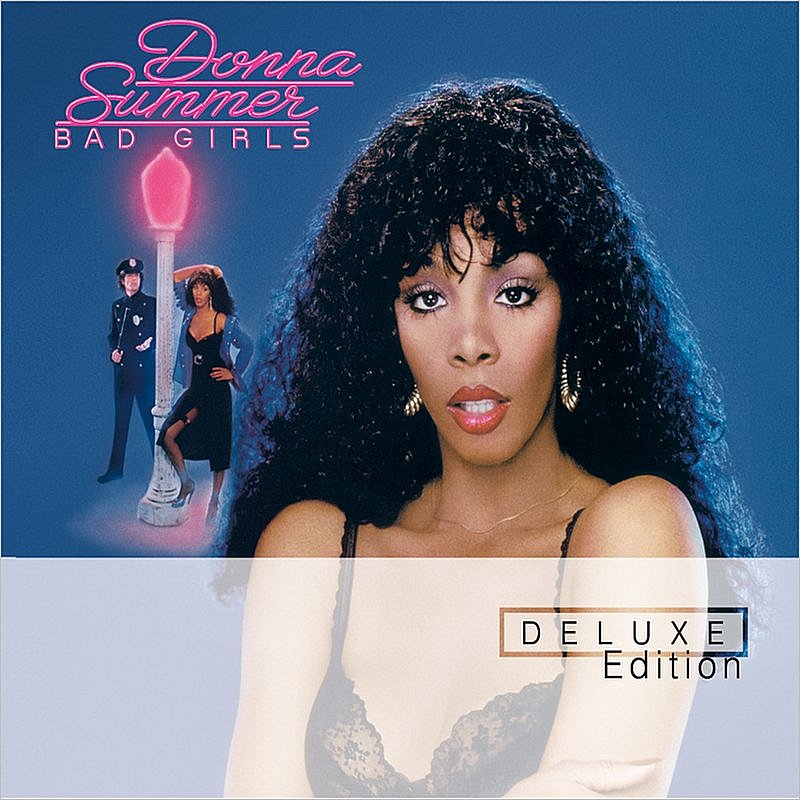
Donna Summer - Bad Girls (1979)

Donna Summer - Bad Girls (1979) On WLCY Radio
'70s #1 Hits on WLCY Radio


"Bad Girls" is a song by American singer Donna Summer, co-written by Summer and the Brooklyn Dreams.

In 1979 the song hit the spot on the Billboard pop, R&B and disco singles charts simultaneously becoming, alongside "Hot Stuff", her most successful single. Bad Girls the single, spent 5 weeks on the top of the "Hot 100 chart" and sold over 2 millions copies in the US. The song helped the album of the same name to reach the multi-platinum status in the United States. A 12" single of the song was released as a medley with "Hot Stuff".

Although "Hot Stuff" was extended for the 12" single, "Bad Girls" remained in the 4:55 album version. A "Bad Girls" 12" single with a time of 6:55 was produced but never released commercially. A demo version of the song was released on the "Deluxe Edition" of the "Bad Girls" CD.

Oct 2, 2015

Robert John - Sad Eyes (1979)

Robert John - Sad Eyes (1979) On WLCY Radio
"Sad Eyes" is a song written and recorded by Robert John, and released in April 1979. It debuted May 19 on the Billboard Hot 100, reaching the top of the chart on October 6.

"Sad Eyes" is one of just a few non-disco, or disco-influenced, songs to top the 1979 pop charts.


repeat
repeat_one
shuffle
skip_previous
play_circle_filled
pause_circle_filled
skip_next
volume_up


Cher - Dark Lady (1974)

Cher - Dark Lady (1974) On WLCY Radio
'70s #1 Hits on WLCY Radio


"Dark Lady" is a pop rock song recorded by American singer-actress Cher, and the title selection from her eleventh studio album, Dark Lady. Written and composed by John Robert "Johnny" Durrill and produced by Snuff Garrett, it was released as the album's first single in early 1974. The song became Cher's third solo U.S. number one hit on March 23, 1974, and her last until "Believe" twenty-five years later.

"Dark Lady" was written and composed by The Ventures's keyboard player, Johnny Durrill. He recalled: "I spent a week in his (Snuff Garrett's) office playing him songs, one of which Cher recorded. Later, when I was on tour in Japan with the Ventures, I was writing an interesting song. I telegraphed the unfinished lyrics to Garrett. He said to 'make sure the bitch kills him.' Hence, in the song both the lover and fortune teller were killed." Thus, "Dark Lady" may with some accuracy be described as a murder ballad, even though the narrator of its lyrics essentially commits a crime of passion.

The critic Peter Fawthrop, writing for Allmusic, called this song a "grimly comedic folk song."

The "Dark Lady" of the song's title is a fortune teller. The narrator of the song learns that her lover has been unfaithful to her with, as the fortune teller says, "someone else who is very close to you." Advised to leave the fortune teller's shop, never to return, and to forget she has ever seen the fortune teller's face, the narrator returns home in a state of shock, unable to sleep, and then realizes to her horror that she had once smelled, in her own room, the very perfume the fortune teller had been wearing. Sneaking back to the fortune teller's shop with a gun, she there catches her lover and the fortune teller "laughing and kissing," and shoots them both to death, presumably in a fit of rage.

In 1974, "Dark Lady" topped the U.S. Billboard Hot 100 for one week, becoming Cher's third solo #1 hit. The song was also a #1 hit in Canada and Sweden, a top ten hit in Norway and a top twenty hit in the Netherlands. Like "Half-Breed," the song struggled in West Germany and the UK, though it managed to reach top forty status in the UK.

Oct 1, 2015

Debby Boone - You Light Up My Life (1977)

Debby Boone - You Light Up My Life (1977) on WLCY Radio
'70s #1 Hits on WLCY Radio


"You Light Up My Life" is a ballad written by Joseph Brooks, and originally recorded by Kasey Cisyk for the soundtrack to the film of the same name. The song was lip synched in the film by its lead, Didi Conn.

Later, Debby Boone, Pat Boone's daughter, recorded the single, which became an enormous success, topping the 1977 Billboard Hot 100 chart for a (then) record-setting ten consecutive weeks. It became the most successful single of the 1970s in the United States, and set a new Hot 100 record for longest reign at No. 1. (Elvis Presley's double-sided "Don't Be Cruel/Hound Dog", then recognized as the longest-running No. 1 of the rock era, spent eleven weeks atop the Billboard Best Sellers chart in 1956, before the debut of the Hot 100.) The record was matched in 1982 by Olivia Newton-John's "Physical", but never surpassed until a 1991 change in chart methodology allowed songs to achieve longer reigns at No.1 ("End of the Road" by Boyz II Men set the new record, thirteen weeks). The single, which was certified platinum by the Recording Industry Association of America (RIAA), also hit #1 on the Adult Contemporary chart and reached #4 on the Country chart. The single peaked at #48 in the UK Singles Chart.

Although it was written by Brooks as a love song, the devout Boone interpreted it as inspirational and proclaimed that it was instead God who "lit up her life." This fact was later alluded to when the song appeared in the twelfth episode of the third season of The Simpsons.

Boz Scaggs - Lowdown (1976)

Boz Scaggs - Lowdown (1976) On WLCY Radio
'70s #1 Hits on WLCY Radio


"Lowdown" is a hit song originally recorded in 1976 by Boz Scaggs for his mainstream-breakthrough album, Silk Degrees. The song was co-written by Scaggs and David Paich. Paich, along with fellow "Lowdown" session musicians David Hungate and Jeff Porcaro, would later help form the band Toto.

Initially, Silk Degrees received a lukewarm commercial response and, similarly, the first single released from the album, "It's Over" just barely cracked the top 40 on the Billboard Pop Singles chart, peaking at #38. One day, however, a Cleveland R&B radio DJ began playing "Lowdown" straight off the album. This was during a time period when DJs had much more say in what got played. Public response was very positive and soon Scaggs' record label, Columbia, sent the song to other R&B-oriented radio stations for airplay. It began receiving airplay on Top 40 Pop stations as well, and when it was officially released as a single in June 1976, it went on to become Scaggs' first major hit, eventually peaking at number three on the Billboard Pop Singles chart. It was also successful on the R&B and Disco Singles charts, peaking at number five on both and was also a minor hit in the UK, reaching #28. Scaggs is quoted as saying that the success of "Lowdown" was 'an accident' and that, even though it was their favorite from Silk Degrees, he and the others involved in the making of the song thought there 'wasn't a chance in hell' that the song would have been released as a single. The single was certified gold by the RIAA for sales of one million copies and would go on to win the Grammy Award for Best R&B song of 1976.